
conversation with Miki Kuusi
Doing common things uncommonly well

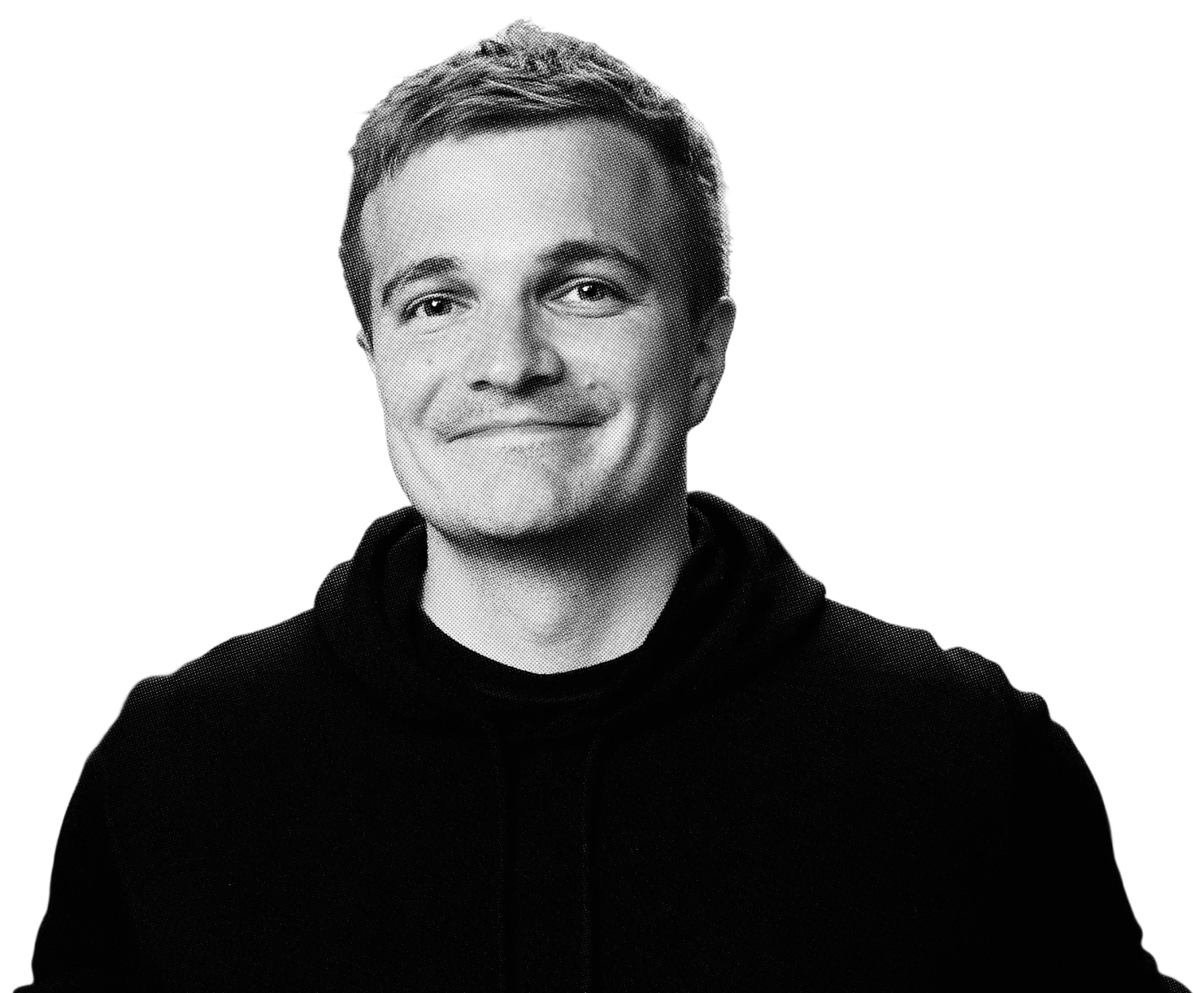
Mikko Akseli Kuusi dropped out of Aalto University’s business school at twenty-two to run Slush, the Helsinki tech conference he’d co-founded as a student. He went on to co-found Wolt in 2014, building it from a Helsinki food-delivery app into a platform operating across twenty-three countries. DoorDash acquired Wolt in 2022; following the Deliveroo acquisition, Kuusi relocated to London to serve as its CEO. He is thirty-six, owns six identical Lululemon hoodies in very dark blue because “black is somehow too black for me,” and has a habit of quoting Rockefeller on the subject of doing common things uncommonly well. He means it about restaurants. He also means it about corner radii.
Miki Kuusi spoke with Stanley Wood from DoorDash’s London office in February 2026.1
STANLEY
You often quote Rockefeller: “doing common things uncommonly well.” Where does that come from for you?
MIKI
When I was working at Supercell, this was back in 2012 – thirty-five people, just pivoting out of doing MMORPGs on Facebook. Timur, who was the product lead for Hay Day, explained the core idea. It was a farming game on mobile, at the time when FarmVille was massive. Oh my God—the most boring game category you could come up with.
But Timur looked at how people played games on tablets. If you watched someone from behind, the interaction looked like this—point, click. Point, click. Because the games were designed for a mouse. He said: if you’re playing on a mobile device, shouldn’t the game look like you’re painting the screen? So in Hay Day, harvesting meant dragging across the field. That’s what I’d call doing a common thing uncommonly well. Every farming game has a harvesting function. But there was this thoughtfulness behind it.
And then the designer who drew the animals created this very curious-looking chicken—big eyes, a little twinkle. Every farming game has chickens. But this chicken became something people knew Hay Day for. It’s not a revolutionary idea. It’s a small thing done with humour and originality.
Supercell was full of these details. It’s not a secret that they became the most successful mobile games company of all time. And it wasn’t because of one big thing. It was hundreds of small things.
STANLEY
What did that look like when you built Wolt?
MIKI
We wanted to build an experience that held your hand throughout. One thing that frustrated me as a customer ordering food: you’d go through all this trouble, send the order, and get “order sent.” Then what? Is it lost in the universe of the Internet? Did someone see it?
So we built this notification—”a human has seen your order.” We gave the merchant three minutes to tap the iPad. If they didn’t tap, we cancelled the order. When they tapped, we told the customer. It was a small interaction, but it addressed this anxiety of: what happens now?
And we put a game in the order view. You’re waiting—is there something we can do to surprise you? We used it for virality too. Sharing your high score became one of the most shared things about the Wolt experience. Beat a certain score and you’d get a free delivery. Surprise and delight.
Transitions, same principle. When you open Wolt, you see the splash screen for a little longer than the app needs it. We use that time to preload the content behind it. So when it lands, everything’s ready—no loading indicators. Everyone has a splash screen. Everyone loads content. But we felt it was nicer to look at a seasonally changing screen for one second longer than to see a skeleton loading state.
STANLEY
Do you believe most people notice these details?
MIKI
I’ve noticed that people sense when there’s a well-designed product, even if they can’t pinpoint what makes it that way. You somehow sense it.
I still remember the first time I used Google as a kid. AltaVista, Yahoo—full of stuff, advertisements, news. And then I opened Google: a logo, a search bar, “I’m Feeling Lucky.” And that was it. There was something very pure about it. This company knows I came here for search, and they give me the only thing I need.
For me personally, it goes back to my personality. I’m a perfectionist. I pay attention to very little things. And I get incredibly frustrated by most products that I use.
He pauses here, and then—unprompted—starts talking about microwaves.
A simple microwave needs one thing: time. A more complicated one needs two: time and intensity. So now you look at most microwaves on Earth. The amount of buttons and dials. It’s a terrific example. Most kitchen appliances are far more complicated than they need to be. And the art is: how do you hide complexity that’s necessary in an edge case without making 99% of your users go through it every time?
He then spent four minutes explaining the engineering of a Subway sandwich menu editor—foot-long versus half-foot-long, cascading prices, optional options within optional options—which tells you everything about how his mind works. a passion for doing things right.
STANLEY
We have three brands now. What should stay different?
MIKI
Technically, Wolt, Deliveroo, and DoorDash do the same job. Selection, quality, affordability—those are the biggest drivers. But how you do it is where the differences live.
DoorDash was shaped by the problem of incredible scale across a very large market. Doing it consistently across all of these different places, small and big. Wolt came from a smaller country and had to solve the problem of how you do this in very different cultures, languages, environments—and do it really, really well. Deliveroo was moulded by London—one of the biggest cities on earth—having to solve London really well.
I think there’s a playfulness to Wolt, and partially to Deliveroo, that exists in DoorDash when you look at how we do marketing and how we talk. But it’s not as visible in the app. That’s something I want to make sure is part of how we operate—this balance between being professional and efficient and utilitarian, and having that twinkle in the eye.
And I want to make sure we retain the ability to talk to our customers like we talk to other humans. Not corporate-style language. Real language that your mother understands. This happens easily when you become bigger—you start using more rounded words.
STANLEY
You talk about the rational and the emotional. What do you mean by that?
MIKI
There’s a rational and an emotional side to every product. A great product gets both right.
The rational side: does this thing do the job? Is it easy to find what I want? Is the experience seamless? The emotional side: how does it feel?
I’ll give you an example. A customer ordered food and ticked the box for utensils. The order came without utensils. They were at a relative’s house, no utensils available—they couldn’t eat. Our customer support gave a very rational explanation: the restaurant doesn’t have utensils, it was a mistake in the app. The customer escalated to me, frustrated as hell.
The issue wasn’t that we couldn’t explain what happened. The issue was that we didn’t acknowledge the emotion. “You told us you needed utensils. We didn’t give you utensils. That’s on us. We’re sorry.” We probably never said those words.
The emotional side of product is the colours, the fonts, the transitions, the imagery, the tone of voice. Not everything we can measure in a short-term test. But that doesn’t mean it doesn’t matter. And that’s the balance I want to make sure we strike.
STANLEY
You moved from Helsinki to London. What’s surprised you about your new home?
MIKI
London is a very unique city. How can it be so large but feel so personal? There’s a medieval city behind it that creates this sprawling, organic grid—it doesn’t feel like someone designed it on A4 paper with a ruler. The villages that merged into Greater London. The mixture of genuinely old buildings and new buildings. It has authenticity.
I appreciate the greenness—trees, small parks, massive parks. The Underground is incredibly powerful. In most cities, the underground system is something people avoid if they can. In London, it’s how the city works.
And the mud. I haven’t seen this kind of mud anywhere else. It’s very sticky. As a Finn, I didn’t appreciate how simple our soil was before coming here. There’s an entire infrastructure of how you use shoes in this city depending on the time of year.
He is, it should be noted, completely serious about the mud.
One service I love: we work with a GP, and whenever they prescribe something, it arrives by courier. I haven’t been to a pharmacy once since moving here. In Helsinki, I’d have to go pick it up. Here, the doctor sends it to your house. As an isolated example of how a large city enables very specialised services—it’s incredibly powerful.
STANLEY
What did you take from Ilkka Paananen (co-founder, and CEO of Supercell)?
MIKI
One thing Ilkka likes to say—and I’ve used this to describe what I wanted to build at Wolt—is that a lot of companies say they want to be like a family. Great companies do have family-like characteristics. You break bread, you support each other, you succeed together. But a great team is different from a family.
You might ask, so what is the difference between a team and a family? A team is defined by its capability to win. Ilkka is a huge ice hockey fan, so the analogy was always ice hockey. A team only exists if it can win matches. You need wins to get sponsorships to hire the best players to win more. And that means you make difficult decisions. You hire great people. You part ways with people who aren’t the right fit—sometimes not because they aren’t great, but because they’re not right for the role you need. A family is connected by blood, unconditional. A team optimises for winning.
And then: the difference between good companies and great companies. Both know what needs to be done. Only the great ones execute on the most difficult things. Good companies might shy away, or wait too long, or do part of a difficult decision but not all of it. Great companies do the hard thing, and they do it quickly.
You can be humane about it. You can be transparent. No surprises. People get feedback directly, not behind their back, in words they understand. Not hamburger feedback where they have to guess what you actually mean.
STANLEY
What does AI change for designers?
MIKI
If you have a painter, they have the canvas, the paint, and the brush. A designer using Figma—different tool, same principle. AI is another tool. But the beautiful thing about it is that it’s more accessible to a much larger number of people.
What we’re already seeing is that good taste is going to matter more than ever. The tool is more usable for everyone, which means having good judgement and good intuition is the difference between person A and person B. And then it’s possible, increasingly, for one person to do design, product, engineering, and analytics. Which means we don’t have the luxury of being focused on such a narrow part of the thing anymore.
There used to be a saying that there will be a day when a single person can create a billion-dollar company by themselves. That is already happening now. And that was impossible to think of even ten years ago.
But it’s going to be a journey. The easiest thing to focus on is: this is going to remove jobs. And that’s the history of human development. What used to take ten people takes one. But it opens up possibilities we don’t even understand today. So you have to be curious. You have to have an open mind. Zen Buddhism has a philosophy of maintaining a beginner’s mind—always approaching things like a first-timer. That type of philosophy is more important than ever.
Executing on these small details probably matters more than ever—because anyone can use AI to come up with a pretty basic version of most things. And then the question is: if you really do something as your vocation, how do you make it stand out in the middle of all those things that anyone could do very easily? If you think about launching an app in 2009 or 2010, any app was unique because there were so few people who would make apps. And then imagine making an app today.
this interview first appeared in an internal publication i created for the design studio at DoorDash. we both felt it deserved a wider audience.